American Cement Association Members and EPA Lead Progress on Alternative Fuel Use.
By Diane Tomb and Christine McCarthy
For cement manufacturers, alternative fuels (AF) offer more than an opportunity to reduce reliance on traditional energy sources. They also allow plants to put their unique operating capabilities to work addressing difficult material-management challenges in the communities they serve.
Two award-winning projects involving scrap tires and forest biomass from wildfire prevention activities demonstrate what can be achieved — and how greater regulatory clarity from the Environmental Protection Agency (EPA) could help cement plants expand these solutions across the industry.
The American Cement Association’s (ACA) member companies are making real progress with AF, working with the EPA Smart Sectors program, which is designed specifically to support agency collaboration with sectors like the cement industry to promote improved economic and environmental outcomes.
The idea is that specialized knowledge and close communication with industry experts are essential for sound regulation that advances the EPA’s priorities. Through sustained outreach and advocacy on behalf of the cement industry, the ACA has worked with the EPA to address regulatory barriers to alternative fuel use, including issues cited in the EPA’s proposed rule for previously abandoned scrap tires and its guidance on clean cellulosic biomass.
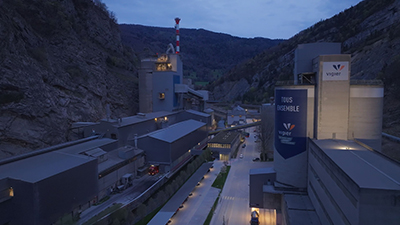
Two cement plants were recently recognized for their creative work with AF. GCC’s Pueblo, Colo., plant was the winner of ACA’s Land Stewardship award for its AF tire-derived fuel (TDF) and tire monofill reclamation project. UNACEM North America’s Drake Cement Plant, in Paulden, Ariz., secured the Overall Environmental Excellence Award for its forest biomass AF program. These projects helped raise awareness at the EPA, with other industries, and in the broader community on how cement manufacturers can help resolve local hazards.
GCC: Pueblo Plant
Located across the country, tire monofills often begin when discarded tires accumulate faster than they can be processed, recycled or sold. These “tire mountains” pose serious environmental and public health risks because they can become breeding grounds for mosquitoes and are highly vulnerable to fires. These fires are extremely difficult to extinguish, can remain burning for months to years, and take nearly a decade to remediate.
Colorado knows these issues well. In 2020, the largest tire monofill in the nation, located in Hudson, Colo., caught fire. Millions of end-of-life tires burned, creating smoke visible from as far as 150 miles away. By 2024, the state committed to monofill remediation of collections of waste tires by 2034.
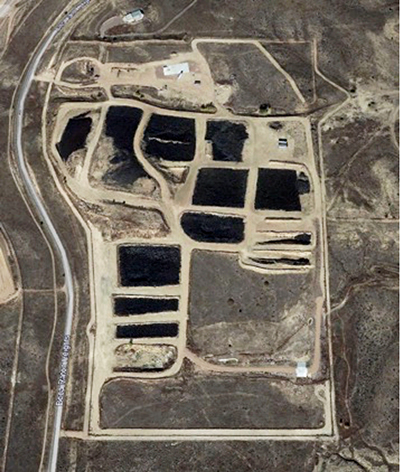
GCC brought a pilot project to the Colorado Department of Public Health and Environment (CDPHE), proposing to turn the tires into AF on a larger scale. Once home to 67,000 tons of waste tires, the site has now been fully restored and supports native vegetation and resilient ecological function. No other use of scrap tires — playgrounds, other recycled products, etc. — could generate the kind of demand and value that would make a dent in the societal problems of discarded motor vehicle tires.
Tires contain a significant amount of energy for combustion. A waste tire has an energy value of approximately 12,000 to 16,000 BTUs per lb. (about 28 to 37 kJ/g). Scrap tire rubber has a heat value roughly 10% to 25% higher than that of standard coal. A single tire has roughly the energy equivalent of 2 gal. to 2.5 gal. of oil.
GCC installed a learning software called PXP that is integrated into the plant’s equipment control system (ECS). For TDF usage specifically, the PXP software controls the kiln ID fans to keep oxygen levels in the appropriate range, supporting kiln stability and optimizing TDF consumption.
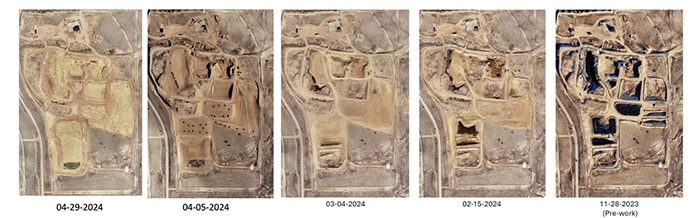
GCC’s Pueblo plant and partners, including Colorado Energy Recyclers LLC, a GCC company, which owned the land, gathered the tires, processed them (cleaning, shredding and de-wiring), and rehabilitated the reclaimed acreage per the CDPHE closure plan. As the time-lapse photos demonstrate below, the 46-acre reclamation was accomplished quickly and thoroughly despite its magnitude.
“What makes this achievement especially meaningful is that it was not driven by one department or individual,” said GCC Pueblo Plant Manager John Goetz. “Our CER, operations, maintenance, environmental, engineering, quality and safety teams worked together to successfully increase TDF utilization in the kiln.”
COLORADO ENERGY RECYCLERS RECLAMATION
UNACEM North America: Drake Plant
Similarly, UNACEM North America and its Drake plant partnered with the U.S. Forest Service, Arizona Game and Fish Department, and regional contractors to address the serious wildfire hazard impacting Arizona. The thinking was that the hazard could be substantially controlled by forestry practices that remove forest fuel from vulnerable areas.
The biomass project avoids emissions associated with decomposition, open burning and wildfire events. In summer 2026, the news is rife with reports of wildfires in the United States, Canada and Europe. The fires created smoky skies across great distances, as well as loss of life, property destruction and health hazards.
Drake has commissioned Arizona’s first full-scale biomass-calciner integration, replacing traditional coal/coke fuels with locally sourced forest biomass. A key source of material is the UNACEM North America, Drake Plant Pronghorn Corridor Project, which spans more than 9,000 acres and supports habitat restoration and wildlife migration.
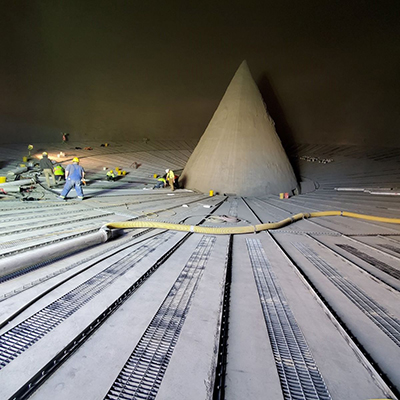
Biomass in the area is delivered primarily as wood chips, with some sawdust blended into the fuel mix. The material is processed and pneumatically injected into the calciner as a solid fuel. A dedicated calciner injection system was installed to support this transition while maintaining clinker quality.
Additionally, the biomass substitution required some additional investments, including:
- Reception, storage and conveying systems, along with ongoing costs of material procurement, transportation and processing.
- Plant process control systems to manage AF integration, adjusting feed rates and combustion conditions in real time to ensure stability of operation.
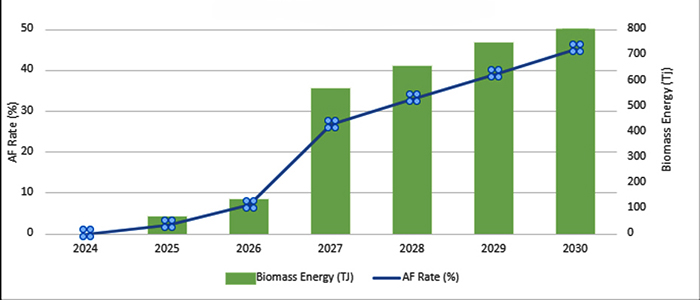
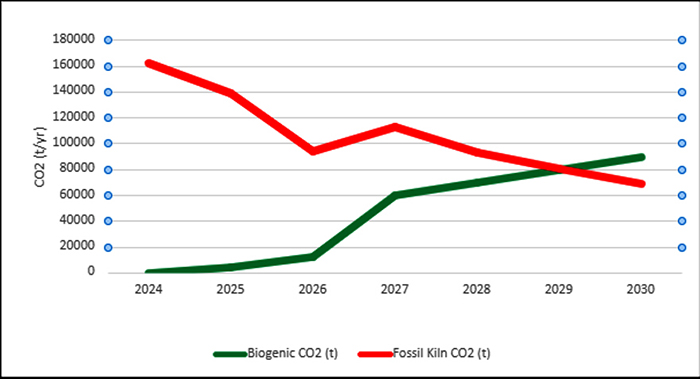
The emission benefits achieved through the program are noteworthy. Each ton of biomass used avoids non-biogenic CO2 emissions by displacing fossil fuels. (Biogenic emissions can be subtracted from the plant’s overall CO2 emissions). Each ton of biomass substituted avoids approximately 176 KG of CO2 emissions. The plant plans to scale up use of biomass AF, if supply and infrastructure considerations permit, to 50% AF by 2030.
The GCC and UNACEM cement plants formed partnerships with state, local and federal organizations to address material management problems. These innovators managed prior regulatory ambiguity to increase their AF programs.
Practical Rulemaking and Regulatory Guidance Obtained
With support from the cement industry, the EPA has undertaken a rulemaking that would promote the further use of abandoned tires as fuel by designating previously abandoned scrap tires used in cement kilns as non-waste fuel.
The proposed rule would eliminate burdensome and unnecessary requirements to shred and de-wire abandoned tires before utilization at plants. Cement kilns completely utilize all material in the TDF, including incorporating ash into the new product. The comment period on the proposed rule ended in late May 2026, and the ACA supports finalization of the proposal.
“Our latest proposal provides a commonsense approach to better clean up scrap tires and realize their full potential as fuel,” said Office of Land and Emergency Management Acting Assistant Administrator Thomas Croci. “The proposed changes support several goals of the Resource Conservation and Recovery Act (RCRA) while simultaneously reducing risks to human health and addressing environmental harms caused by tire piles.”
Following engagement with the ACA and the cement industry in 2024, the EPA issued clarifying guidance on the use of clean cellulosic biomass as fuel under the Non-Hazardous Secondary Materials rules. In 2025, EPA Smart Sectors held a widely attended forum with the ACA and other trade groups that provided additional guidance and feedback from the cement and waste management industries on the use of biomass residuals as AF.
“This collaboration between EPA and ACA represents an example of how the public and private sectors can work together for public health and the environment. ACA member plants’ best practices and lessons learned help inform our efforts on alternative fuel substitution,” said EPA Environmental Protection Specialist Peter Hillebrand.
The forum opened with welcoming remarks from Becky Keogh, associate administrator of the EPA’s Office of Policy, who highlighted the importance of the cement industry to the administration and emphasized how the use of alternative fuels aligns with EPA priorities.
Discussing the Drake biomass project during the forum, UNACEM Vice President of Sustainability and Environmental Desirea Haggard told attendees that, “Increased use of locally sourced biomass residuals can result in a reduction of CO2 and CH4 outputs while also reducing PM10 and PM2.5 emissions by supporting regional forest management practices that mitigate fire risk.”
Conclusion
Forest biomass AF worked beautifully for UNACEM’s Drake Cement plant, securing the ACA Overall Environmental Excellence recognition. Not every cement plant will have a supply of forest biomass close at hand, but most can benefit from local availability of various forms of organic material. The wheels are turning across cement plant operators nationwide with the acceptance and success of scaled biomass substitutions.
The GCC Pueblo plant enjoyed a unique opportunity with a tire monofill in nearby Fountain, Colo., and a motivated state government facing a tire mountain remediation deadline. But waste tire collections are found in every state, and TDF from tire collection programs has been widely used in cement production for years. If finalized, EPA’s proposed reclassification of abandoned tires as non-waste, and the associated changes to processing requirements, would remove unnecessary regulatory burdens around utilizing abandoned tires as fuel in cement kilns.
The ACA team’s ability to achieve cooperative, cross-disciplinary solutions to challenging problems was prominently on display in its interaction with the EPA and the Smart Sectors program on these two initiatives. Relieving the burden of abandoned tires and excess forest biomass benefits communities and provides cement plants with a local, sustainable alternative source of non-traditional fuel.
1 https://archive.epa.gov/epawaste/conserve/materials/tires/web/html/fires.html
Proposed Regulation Impacting Tires
EPA supports the highest and best practical use of scrap tires in accordance with the waste management hierarchy, in order of preference: reduce, reuse, recycle, waste-to-energy, and disposal in an appropriate facility. With “waste-to-energy” being a preferred alternative to landfilling, ACA worked with EPA to see if collectively they could do more to make the pathway to increased TDF use in cement plants less complicated and more certain of compliance acceptance.
Diane Tomb is president and CEO of ACA, bringing more than 25 years of experience in public policy, advocacy and executive leadership. Christine McCarthy is counsel, environmental policy and advocacy at ACA, where she works on environmental and regulatory policy issues affecting the cement industry.
Founded in 1916, ACA is the premier policy, research, education and market intelligence organization serving America’s cement manufacturers. ACA supports sustainability, innovation and safety while fostering continuous improvement in cement manufacturing, distribution, infrastructure and economic growth. For more information, visit www.cement.org.